
Reselling certainly isn’t a new concept. People have been buying things cheaply and selling them for a profit for decades, whether through newspaper classifieds, car boot sales or, later, sites such as eBay. However, over the past few years, reselling has become much more visible – and social media has played a huge part in that.
Scroll through TikTok, Instagram or YouTube and you won’t have to look far to find resellers sharing their latest charity shop haul, revealing how much profit they made at a car boot sale or packing a mountain of parcels ready for the post office.
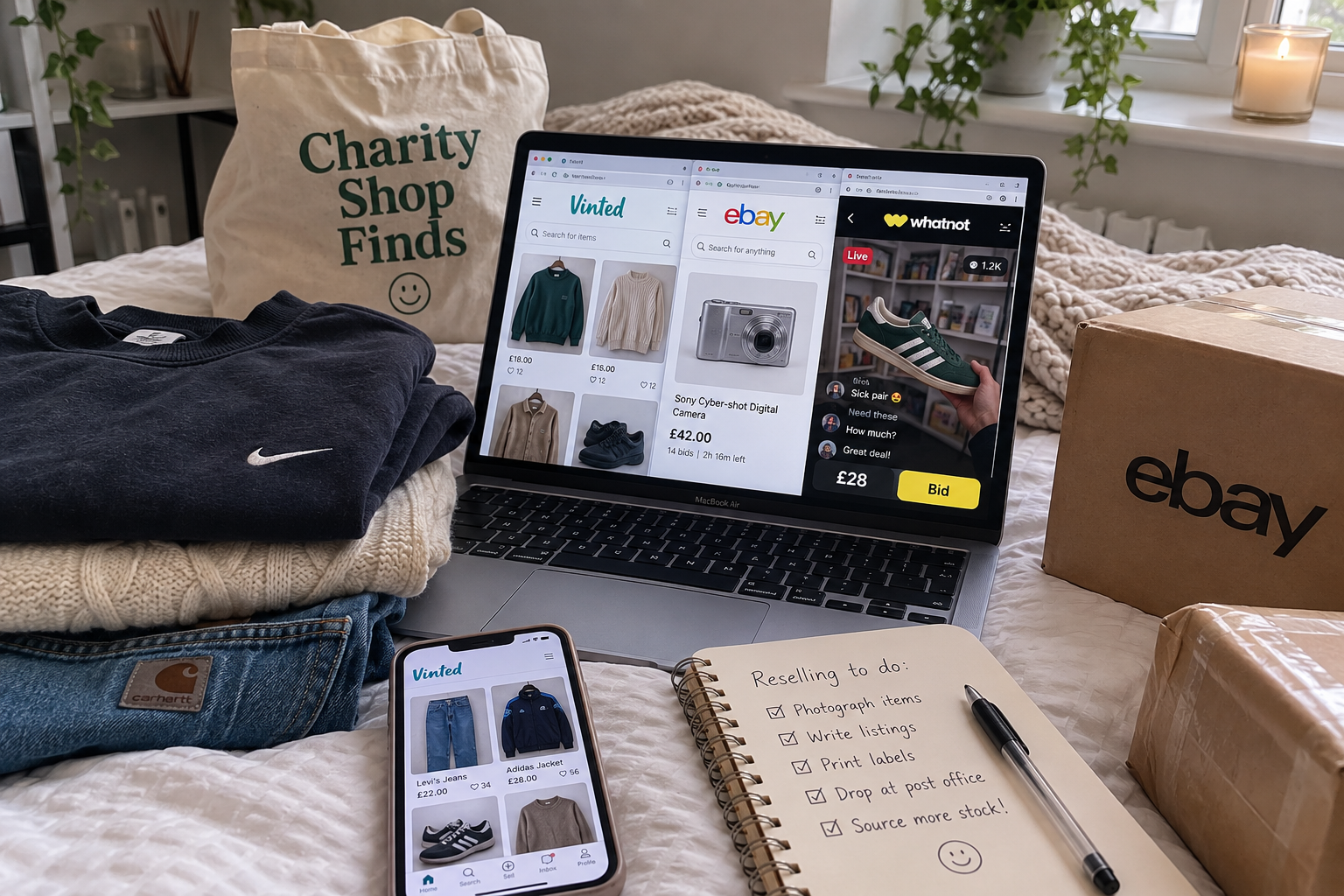
For some, reselling is simply a way to make a little extra money. For others, it has developed into a serious side hustle or even a full-time business.
Where Are Resellers Finding Their Stock?
One of the most interesting aspects of reselling content is seeing where people actually find the things they sell. You don’t necessarily need access to wholesalers or huge amounts of money to get started.
Charity shops are a popular hunting ground. Resellers search through rails of clothing, shelves of books and cabinets of collectables looking for something that has been overlooked or underpriced. Branded clothing, vintage items, toys, games, collectables and homeware can all potentially be resold.
Car boot sales are another favourite, particularly because sellers are often motivated to clear their belongings rather than achieve the highest possible price. Resellers might pay £1 or £2 for something which could potentially sell online for considerably more.
Other sources include jumble sales, house clearances, Facebook Marketplace, local selling groups, auctions and clearance sections in shops. Some people even buy bundles or job lots online, keep the items they want and resell the rest individually.
Of course, there is never a guarantee of profit. Experienced resellers often research completed sales before buying rather than simply looking at what other sellers are asking.
Vinted Has Made Reselling More Accessible
Vinted has undoubtedly helped make second-hand selling feel accessible to a much wider audience. Creating a listing is relatively straightforward: take some photographs, write a description, choose a price and wait for a buyer. Vinted also doesn’t charge sellers a selling fee, which can make inexpensive items more worthwhile to list.
Although Vinted is strongly associated with clothing, its categories now extend far beyond clearing out an old wardrobe. Toys, homeware, collectables, electronics and numerous other second-hand items can be found on the platform.
Social media is full of Vinted sellers documenting their progress, from “what sold this week” videos to challenges where someone starts with a small amount of money and tries to grow it through reselling.
eBay Remains a Reselling Giant
eBay UK remains one of the biggest names associated with reselling. Its huge potential audience makes it particularly useful for unusual, collectable and higher-value items.
For many resellers, eBay is also an important research tool. Looking at what similar items have actually sold for can help determine whether something spotted at a charity shop or car boot sale is genuinely a bargain.
There’s an enormous range of items being resold on eBay, including trading cards, vintage toys, trainers, clothing, video games, antiques, books and collectables. eBay itself actively promotes selling as anything from a way of clearing unwanted belongings to starting a business.
The Rise of Live Auctions
Perhaps the biggest change to reselling recently has been the growth of live shopping.
Platforms such as Whatnot and Tilt combine shopping with livestreaming. Rather than uploading an item and waiting days or weeks for somebody to buy it, sellers can appear live on camera, show products to viewers and run rapid auctions.
Whatnot, for example, allows sellers to use auctions, fixed-price sales and other formats while interacting with buyers in real time. Auctions can last just seconds, creating a completely different experience from traditional online shopping.
eBay Live brings a similar concept to the established marketplace, demonstrating just how significant live commerce is becoming.
The interesting thing about live selling is that the seller can become just as important as the products. Successful sellers build communities of regular viewers who tune in not only to shop but also to chat and be entertained.
Social Media Has Made Reselling Entertainment
This is perhaps why reselling has become such a popular form of social media content.
There’s something strangely addictive about watching somebody buy a box of items for £20 and discover that one item inside could be worth £100. Charity shop hauls, car boot sale hunting videos, “sold for” updates and live auction clips combine bargain hunting with the possibility of making money.
Social media has effectively turned something people have quietly done for years into entertainment.
It has also encouraged more people to look differently at the things around them. That unwanted toy, vintage jumper or forgotten collectable might not be rubbish after all – somebody else might happily pay for it.
With platforms such as Vinted and eBay making listing easier and live marketplaces such as Whatnot, Tilt and eBay Live changing the way items are sold, reselling looks set to remain a very visible part of the side-hustle economy.

